The Problem & the Solution
The Thesis
We often try to run 21st-century software on hardware that is 50,000 years old. The result: crashes, overheating, bugs.
The Promise
This book gives you the code to bridge that gap. It's not a reading book; it's a workbook. It translates abstract psychology into clear protocols: how you lead, how you decide, and how you stay stable under pressure.
Not through "positive thinking," but through system architecture.
What's Inside
The book is divided into four modules:
- Foundations: Understand your biological and evolutionary "hardware" and "software".
- Interaction Protocols: Algorithms for communication, feedback, and truth-finding.
- Stability Principles: How to use emotions as data and maintain integrity under pressure.
- Synthesis & Practice: Your toolkit with 28 concrete protocols for everyday use (e.g., "Acute Protocol", "Fact Vault").
Why This Book?
The Metaphor
We view the human as a "system". "Bugs" are cognitive errors, the ego is an outdated "firewall", the body is the "hardware". This de-pathologizes problems: An emotional outburst isn't bad character, it's system overheating.
Hardware Before Software
Without sleep, nutrients, and movement, even the best mental strategy won't work. That's why the book starts with a detailed hardware check-up.
Extreme Application Orientation
No theory without tools. Complex concepts (Kahneman, Dweck, Edmondson) are broken down into actionable protocols. You don't just read it, you apply it.
Reality Instead of Fair Weather
Strategies for the worst case: The book contains chapters on bullying, system decay in companies, and integrity under pressure. It's a handbook for situations where "positive thinking" is no longer enough.
The Intellectual Foundation
This book doesn't reinvent the wheel – it mounts the best wheels on your vehicle. It's a modern synthesis of:
- System 1 & 2 (after Daniel Kahneman): We provide the checklists to prevent cognitive errors in tomorrow morning's meeting.
- Psychological Safety (after Amy Edmondson): We show how to install it – even without official mandate.
- Radical Candor & Negotiation (after Kim Scott & Chris Voss): We embed tactics into an architecture of stability – not just to win, but to de-escalate.
- Atomic Habits (after James Clear): We go deeper into the causes of blockages (safety needs, biological deficiencies).
It's the engineer's view of the psyche: We don't complain about problems, we find the faulty code and patch it.
Who This Book Is NOT For
- ❌ No esoteric promises.
- ❌ No lengthy biographies.
- ❌ No feel-good rhetoric.
If you're looking for spiritual travel guides or "10 tips for happiness", you're in the wrong place. This is a toolkit for pragmatists.
Who It Was Built For
- Leaders who want to prevent burnout in their team without sacrificing productivity.
- Pragmatists who want to make better decisions when the data is unclear.
- IT/tech people looking for a familiar system metaphor for "soft skills".
- Reflective individuals who are ready to truly confront their patterns.
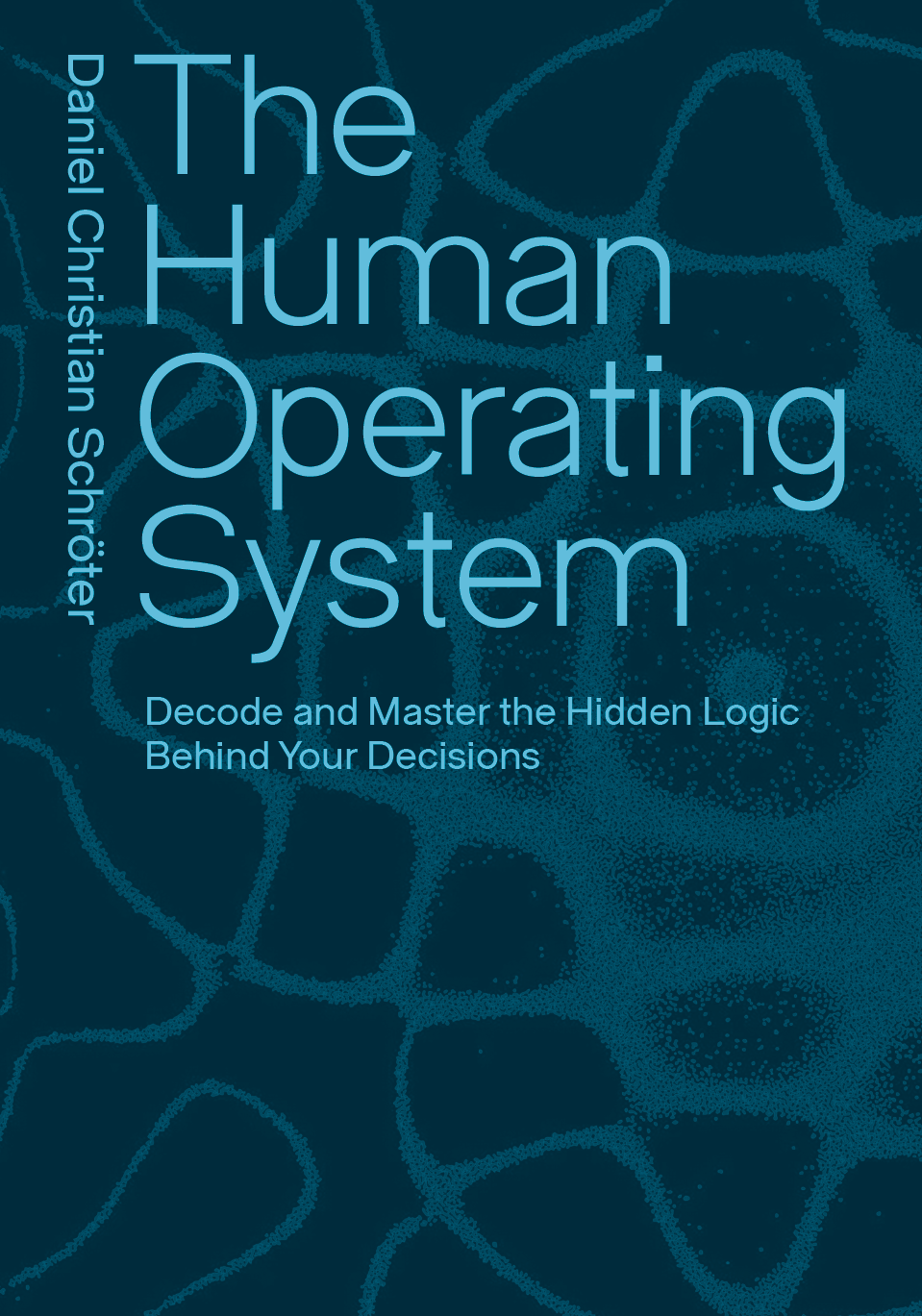
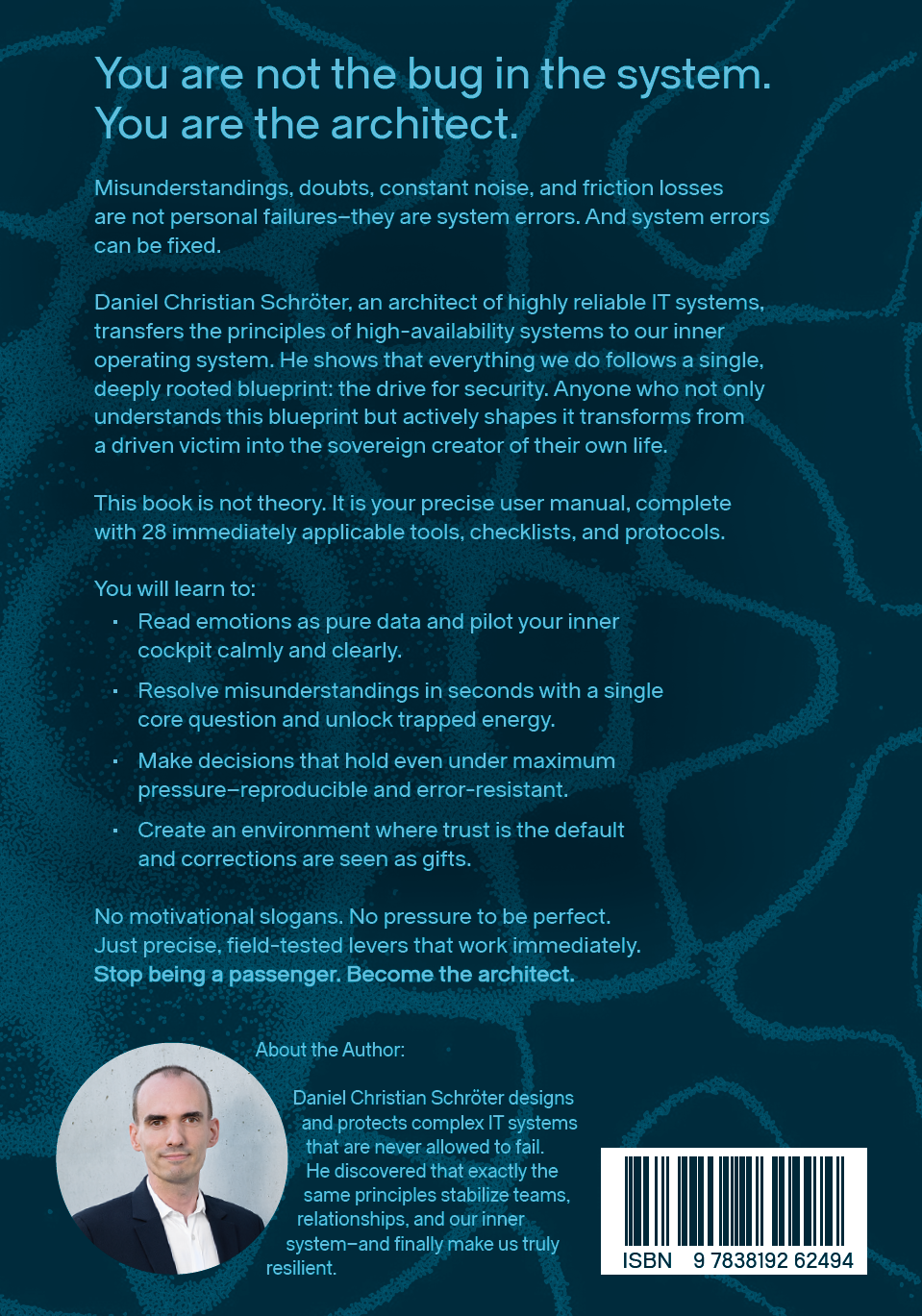
Book Covers
Front and back (English edition).
About the Author
Daniel Christian Schröter is a system architect for critical infrastructures. For over 15 years, he has been designing and stabilizing large-scale digital systems where failure is not an option. His work follows a clear logic: Complexity is not the problem – unclear structure is.
He consistently applies this thinking to organizations, social systems, and individual decision architectures. Schröter views conflicts, dysfunctions, and personal crises not as chance or fate, but as predictable consequences of faulty system design.
His approach is uncompromisingly analytical. He exposes the hidden rules by which people act, identifies structural friction points, and develops resilient protocols for real-world conditions.
As an author, he transfers principles of high availability to human systems. Not as metaphor, but as method. His focus is on agency, integrity, and robustness – where illusions end and responsibility begins.